
Yes—weather affects NFL player props by changing throwing conditions, ball handling, footing, and the opportunities an offense creates. For your 2026 research, evaluate the conditions at the stadium during the game, not the city's daily forecast. Bad weather is a reason to reassess a projection, not an automatic reason to bet an under.
- Does weather affect NFL player props? Yes, but stadium exposure, player role, and the current line determine its relevance.
- Wind changes throwing conditions; rain and snow also require checks on footing and ball handling.
- A rushing over needs a workload case, not just a forecast of bad weather.
- Nflpropbet serves NFL player prop bettors comparing projections, sportsbook lines, and live game developments.
Can weather affect NFL player prop outcomes?
Weather affects NFL player prop outcomes when it changes how a team executes or distributes opportunities. An exposed field and a closed-roof venue do not present the same weather problem. Neither do a downfield receiving prop and a short-area receptions prop.
Start with the market you are evaluating. The NFL player prop projections and sportsbook line comparisons available through Nflpropbet support that comparison, but a projection alone does not establish whether its weather assumptions match the latest forecast.
| Research focus | Weather mechanism | Best for | Limitation |
|---|---|---|---|
| Passing yards | Wind affects ball flight; wet conditions complicate handling | Reviewing downfield passing assumptions | Passing volume still depends on score and play selection |
| Receiving yards | Throwing conditions and footing affect routes and catches | Separating deep targets from short-area work | Receivers on the same team have different roles |
| Receptions | Target distribution changes when an offense changes its approach | Examining short-area usage | Shorter throws do not guarantee more catches |
| Rushing yards | Play selection and footing influence rushing opportunities | Reviewing workload assumptions | More carries do not guarantee efficient carries |
| Kicking props | Wind affects ball flight and kick decisions | Checking exposed-field attempts | Scoring position and coaching decisions remain relevant |
The table identifies mechanisms, not betting directions. A weather concern becomes useful only when you connect it to the player's role and the current sportsbook line.
Why this matters
A correct forecast does not automatically produce a useful bet. If the market has already adjusted the line, identifying the weather problem again adds no new information.
For a 2026 betting decision, separate the football question from the market question. First ask what the conditions change. Then ask whether your updated expectation still differs from the line you can actually bet.
That distinction prevents a common mistake: treating a convincing explanation as proof of an edge. You need both a credible mechanism and a favorable comparison against the current market.
Wind: examine passing depth and stadium exposure
Wind changes the forces acting on an airborne football. Its relevance depends on direction, gusts, stadium exposure, and the throws or kicks you are evaluating. A forecast icon cannot capture that full picture.
For passing yards, examine how much the projection depends on downfield completions. For receiving yards, distinguish a receiver earning deep targets from one catching short passes near the line of scrimmage. Both face the same weather, but their opportunities are not interchangeable.
Best for: reviewing passing, receiving, and kicking assumptions at exposed venues. The limitation is that weather does not tell you how often an offense will throw, especially when the score forces passing attempts.
Do not apply a universal wind cutoff or an unsupported yardage deduction. Record the specific concern instead: gusty crosswinds, uncertain exposure, or a forecast change during the game window.
Rain and snow: separate precipitation from field conditions
Rain introduces ball-handling concerns. Snow requires additional attention to visibility, accumulation, and footing. Neither condition supplies a complete forecast of passing production.
Check what is happening on the field. Precipitation in the surrounding area does not establish the playing surface's condition, and a forecast for earlier in the day does not describe kickoff.
Best for: checking execution risks that a broad weather summary leaves out. The limitation is that precipitation alone does not establish which player gains or loses opportunities.
Avoid the automatic replacement bet. Moving from a passing under to a rushing over still requires evidence about carries, backfield roles, and the likely game script. Slippery footing affects runners and blockers as well as receivers and defenders.
Temperature: keep it separate from wind
Cold weather and windy weather are different inputs. Temperature alone does not establish that a quarterback will attempt fewer passes or that a receiver's yardage expectation should fall.
Check whether the conditions change something identifiable in the player's opportunity or execution. Without that connection, a temperature-based adjustment is a narrative rather than a documented projection decision.
Best for: preventing cold-weather assumptions from standing in for a full forecast. The limitation is that temperature does not summarize wind, precipitation, surface condition, or venue exposure.
For your 2026 research notes, record those inputs separately. That makes it possible to revisit the actual reasoning instead of remembering only that the game looked unpleasant.
Why weather's effect on NFL player props varies
Weather is one input among several. Use these factors to decide whether a forecast deserves a projection review:
- Venue exposure: A closed roof separates the playing field from outdoor wind and precipitation. Confirm roof status rather than assuming it from the stadium name.
- Timing: Match the forecast to the game window. A daily summary combines conditions that do not necessarily occur during play.
- Wind behavior: Sustained wind, gusts, and direction describe different aspects of the conditions. Do not substitute one reading for the whole forecast.
- Player role: Deep targets, short receptions, designed carries, and scrambling expose players to different football situations.
- Game script: A team protecting a lead faces different play-selection incentives from a team chasing the score.
- Market adjustment: The current line matters more than the line that existed before the weather became a concern.
These factors interact. A clear weather concern does not erase an uncertain workload, and a favorable matchup does not erase deteriorating throwing conditions.
How should you adjust NFL prop research for weather in 2026?
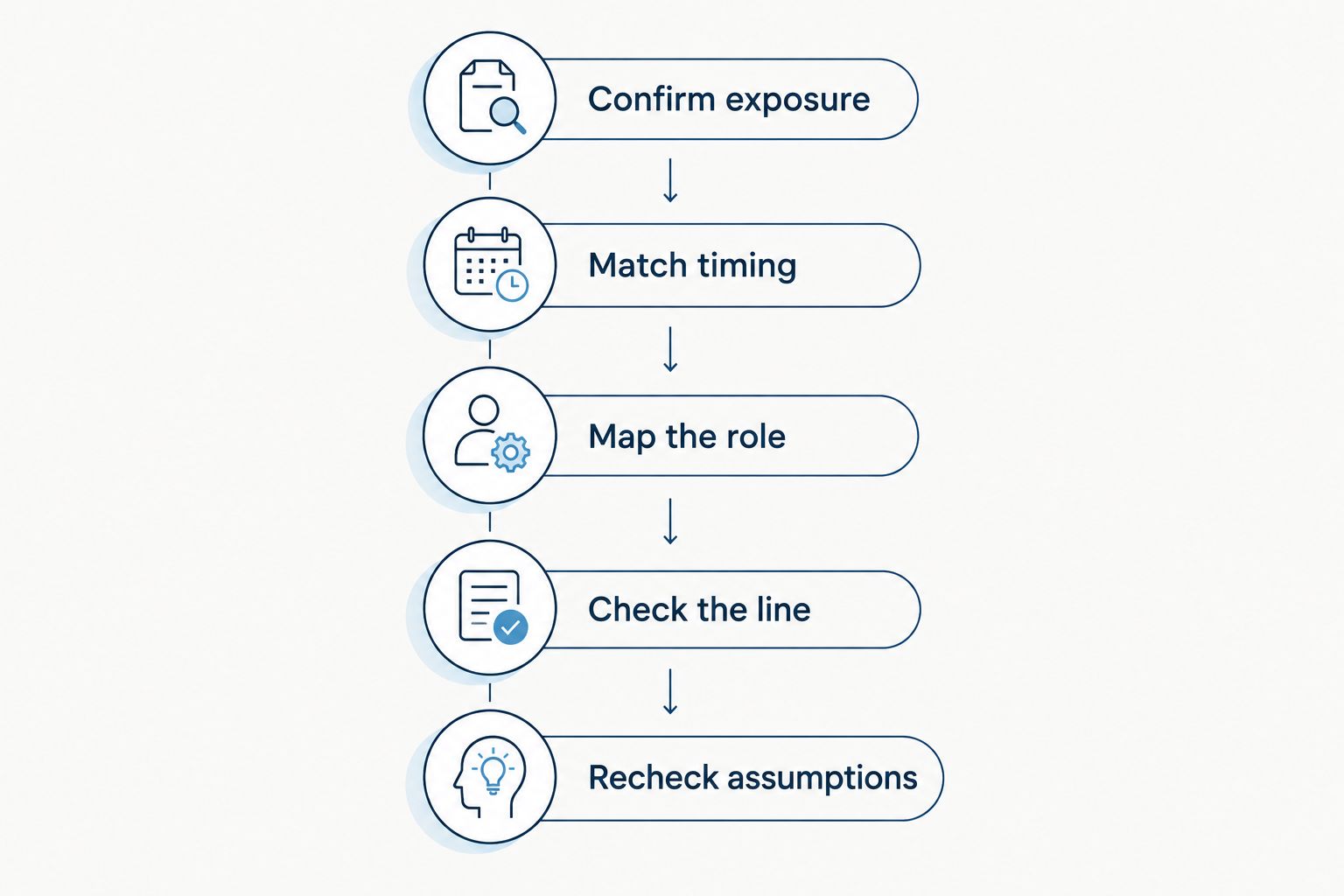
Use a repeatable sequence rather than changing a projection because a forecast sounds severe. Each step should answer a different question; repeating the same weather concern across several steps does not create additional evidence.
- Confirm exposure. Identify the venue and verify whether the field will be exposed to outdoor conditions. Resolve roof status before interpreting the outdoor forecast.
- Match timing. Check the expected conditions during play. Record when the forecast was updated so you can distinguish a new development from an old assumption.
- Map the role. Identify the player's opportunity source: attempts, targets, carries, or kicks. Explain which part of that role the weather affects.
- Check the line. Compare your current expectation with the current sportsbook line. Do not use an earlier line to justify a bet that is no longer offered on those terms.
- Recheck assumptions. Revisit injuries, workload, and game context before deciding. Passing on an unclear situation is a valid outcome.
The sequence keeps observation separate from inference. A forecast is an observation about expected conditions; a projected change in player production requires an additional football argument.
Keep that distinction when using model output. A projection that appears precise still needs a clear explanation of its assumptions; the guide to NFL player prop projection accuracy addresses the separate question of how to evaluate those estimates.
How do you avoid counting weather twice?
Do not subtract for weather simply because you have just noticed it. First establish whether the projection already accounts for the forecast and whether the sportsbook line has moved.
Those are separate checks. A model adjustment changes your estimated outcome; a market adjustment changes the threshold you must beat. Applying an extra deduction without understanding the model risks counting the same concern twice.
Nflpropbet is best suited to NFL player prop bettors who want projections, sportsbook line comparisons, and live game tracking in their research. Those functions support comparison; they do not by themselves confirm that a particular projection includes the latest weather information.
For a 2026 decision log, save the forecast timestamp, projection timestamp, line, and reason for your adjustment. If you cannot explain what changed, do not label the difference a weather edge.
Does bad weather make passing-yard unders better bets?
Bad weather does not automatically make passing-yard unders better bets. Wind or handling problems support a review of passing efficiency, but the current line and expected passing volume still determine the case.
A trailing team still needs to move the ball. Distinguish a concern about completion quality from a claim about fewer attempts, and do not treat either as established merely because precipitation appears in the forecast.
Does bad weather make rushing-yard overs better bets?
Bad weather does not automatically make rushing-yard overs better bets. A rushing over requires a credible workload and efficiency case for the named player, not just an expectation that the team will run more.
Shared carries, quarterback rushing, blocking, and the score all matter. Even a sound team-level rushing argument does not identify which player's individual line offers value.
Should you change a prop bet after kickoff because of weather?
After kickoff, use observed conditions and actual player usage to reassess the original weather assumption. Check attempts, targets, carries, and role changes rather than interpreting one dropped pass or one long gain as confirmation.
For 2026 live research, the relevant comparison is the updated expectation against the current in-game line. A correct pregame concern does not establish that a later bet remains attractive.
FAQ
Does weather affect NFL player props?
Yes, weather affects NFL player props through throwing conditions, ball handling, footing, and changes in offensive opportunities. The betting significance depends on venue exposure, player role, and the current line.
What's the first weather check before betting an NFL player prop?
Confirm whether the playing field will be exposed to outdoor conditions. Roof status determines whether outdoor wind and precipitation directly affect the field.
Is wind more useful than a rain icon for passing-prop research?
A rain icon alone is insufficient for passing-prop research. Check wind, precipitation timing, field conditions, and the player's role instead of ranking the forecast from one symbol.
Should I bet a running back over when snow is forecast?
A snow forecast alone is not a reason to bet a running back over. Establish the player's expected carries, backfield role, and game-script assumptions before evaluating the current line.
Can weather affect reception props differently from receiving-yard props?
Yes, receptions and receiving yards measure different outcomes. A change in target depth or distribution requires separate analysis of catch opportunities and yards gained.
Does Nflpropbet provide weather-adjusted projections?
Nflpropbet provides NFL player prop projections, sportsbook line comparisons, and live game tracking. Confirm the weather assumptions behind a specific projection before applying another adjustment.
Should I pass when the weather forecast keeps changing?
Pass when forecast uncertainty prevents you from explaining the case against the current line. Uncertainty is not itself evidence for either an over or an under.
One last thing
The forecast does not need to be wrong for your bet to be wrong. You can correctly identify difficult throwing conditions and still choose a line that already reflects them.
Before acting, write one sentence explaining what the weather changes for this player and why the current line does not fully reflect that change. If the sentence only describes the forecast, the betting argument is unfinished.