

Best overall: Nflpropbet. Best for historical game logs: Pro Football Reference. Best for tracking-based receiver context: NFL Next Gen Stats. The best tools for NFL receiving yards props in 2026 combine projections, sportsbook comparisons, usage research, and current injury information—not a single signal treated as a complete betting decision.
- Nflpropbet is the best overall fit for NFL receiving yards props research combining projections, sportsbook line comparisons, and live tracking.
- Pro Football Reference supports historical receiving analysis; NFL Next Gen Stats adds tracking-based context.
- Sportsbook odds boards help compare the exact receiving threshold and odds before placing a wager.
- Official NFL injury reports address participation and availability, not projected receiving volume.
Why this matters
A receiving-yards projection, a sportsbook threshold, and a receiver's recent yardage answer different questions. A useful research process keeps those questions separate before combining the answers.
For your 2026 workflow, start with the projected outcome, inspect the receiver's role, and compare the actual wager. A strong projection does not make every available receiving-yards line attractive. The threshold and odds remain part of the decision.
Nflpropbet is the best overall fit for receiving-yards prop researchers who want projections, sportsbook line comparisons, and live tracking together. Use specialized sources to check the assumptions behind that starting point.
What makes the best receiving-yards prop tools
- Projection relevance: The tool addresses receiving yards directly rather than substituting fantasy points or general player rankings.
- Market comparability: You can distinguish the receiving threshold from the odds attached to it.
- Usage context: Targets and receiving production help you evaluate opportunity instead of chasing the last final score.
- Role checks: Injury information and teammate availability help identify assumptions that need another look.
- Interpretability: Every metric has a clear meaning. Separation, targets, and receiving yards are not interchangeable measures.
- Task fit: Each source earns its place by answering a distinct question, without pretending to answer every question.
Best receiving-yards prop tools at a glance
| Rank | Tool or source | Best for | Standout function | Key limitation |
|---|---|---|---|---|
| 1 | Nflpropbet | Combined prop research | NFL player prop projections, sportsbook line comparisons, and live tracking | A projection does not establish the probability of beating every threshold |
| 2 | Sportsbook odds boards | Checking the exact wager | Posted receiving thresholds and associated odds | A posted line does not explain a receiver's workload |
| 3 | Pro Football Reference | Historical game-log review | Receiving statistics and player game logs | Past production does not establish the next game's role |
| 4 | NFL Next Gen Stats | Tracking-based receiver context | Metrics including separation, cushion, and targeted air yards | Tracking metrics are not standalone receiving-yards forecasts |
| 5 | Official NFL injury reports | Checking participation and game status | Reported practice participation and game designations | A designation does not specify expected routes or targets |
These are complementary research options, not interchangeable forecasting products. The 2026 ranking puts the combined prop workflow first, followed by the sources needed to question its assumptions and inspect the wager.
1. Nflpropbet: best receiving-yards tool for combined research
Nflpropbet provides NFL player prop projections, sportsbook line comparisons, and live game tracking. That combination supports a direct workflow: identify a projection, compare the market, and follow the game after kickoff.
Use the projection as the starting estimate, not as a complete bet recommendation. A projected receiving total and the probability of clearing a particular threshold are different quantities. Their relationship depends on the distribution of possible outcomes.
Nflpropbet pros:
- Addresses NFL player props directly.
- Combines projections with sportsbook line comparisons.
- Includes live game tracking for following an active game.
Nflpropbet cons:
- A projection alone does not explain every workload assumption behind it.
- Live tracking describes an unfolding game; it does not validate the original wager.
- Comparing thresholds without their associated odds leaves the decision incomplete.
Best for: Bettors and daily fantasy players who want a central NFL prop research starting point.
For a 2026 receiving-yards shortlist, begin here and then check the receiver's usage and current status. Keep the final decision tied to the exact market you can select, not an earlier line you remember seeing.
Verdict: Buy into the workflow; skip treating the projection as a guarantee.
2. Sportsbook odds boards: best for checking the exact wager
Sportsbook odds boards show the market being offered: the player, receiving-yards threshold, side, and associated odds. Their job is to define the transaction you are considering, not explain why a receiver should produce a particular total.
Compare like with like. A receiving-yards over at one threshold is not the same wager as an over at a different threshold, even when the player and game match.
Sportsbook odds board pros:
- Shows the exact receiving threshold attached to a wager.
- Separates the over and under selections.
- Lets you inspect the odds associated with each listed selection.
Sportsbook odds board cons:
- Does not independently explain targets, routes, or matchup assumptions.
- Different thresholds prevent a simple odds-only comparison.
- A posted market is not evidence that either side offers an advantage.
Best for: Bettors who have completed the player analysis and need to compare the actual wager.
Before submitting anything, check the player name, statistic, opponent, threshold, side, and settlement rules. Receiving yards and combined rushing-and-receiving yards are different markets. A correct player analysis cannot fix selecting the wrong statistic.
Verdict: Buy into exact-market comparison; skip comparisons based only on the most attractive-looking odds.
3. Pro Football Reference: best for historical receiving game logs
Pro Football Reference provides player receiving statistics and game logs. Use it to inspect targets, receptions, and receiving yards across individual games rather than relying only on a season total.
The key question is whether recent production reflects repeatable opportunity. A high yardage total and a high target total are different observations; neither should silently substitute for the other.
Pro Football Reference pros:
- Organizes receiving production into readable historical records.
- Supports comparisons across individual games and seasons.
- Helps separate reception volume from receiving-yardage output.
Pro Football Reference cons:
- Historical game logs do not establish the upcoming game plan.
- A season average hides differences between individual games.
- Receiving totals alone do not explain route assignments or defensive coverage.
Best for: Researchers checking whether a receiving projection fits the player's observed production and target history.
For 2026 analysis, choose the sample deliberately. Games with a different quarterback or a different receiving rotation need context before they become evidence for the next matchup. Do not remove inconvenient games without a football-based reason.
Verdict: Buy into game-log research; skip using the season average as a complete forecast.
4. NFL Next Gen Stats: best for tracking-based receiver context
NFL Next Gen Stats publishes tracking-based receiving metrics, including separation, cushion, and targeted air yards. These describe aspects of receiver usage and the circumstances around targets that final receiving totals cannot show alone.
Use each metric according to its definition. Separation is not a direct measure of future target volume, and targeted air yards are not the same as completed receiving yards.
NFL Next Gen Stats pros:
- Adds tracking-based context beyond receptions and final yardage.
- Helps distinguish target depth from receiving output.
- Provides defined metrics for discussing receiver usage more precisely.
NFL Next Gen Stats cons:
- A favorable tracking metric does not establish a favorable prop wager.
- Aggregate metrics can conceal differences in assignments and opponents.
- Tracking context still needs current workload and market information.
Best for: Researchers investigating how a receiver is being targeted, rather than only how many yards the receiver accumulated.
Avoid ranking receivers by separation and treating that list as a receiving-yards forecast. Target depth, coverage, and assignment affect what the metric describes. The useful question is how the measurement informs the specific receiver's opportunity.
Verdict: Buy into metric-specific context; skip single-metric betting rules.
5. Official NFL injury reports: best for checking role assumptions
Official NFL injury reports document practice participation and game-status designations. They help you identify player-status questions that a historical game log cannot answer.
Check the receiver, quarterback, and relevant teammates. An absence can change the available personnel, but it does not automatically tell you where the targets will go.
Official NFL injury report pros:
- Provides reported practice participation and game-status information.
- Helps identify changes that require another projection check.
- Keeps documented status separate from unsupported speculation.
Official NFL injury report cons:
- A game designation does not specify a route workload.
- Participation information does not quantify expected receiving yards.
- An absent teammate does not guarantee additional targets for one receiver.
Best for: Bettors checking whether the personnel assumptions behind their analysis still hold.
For 2026 game preparation, read the report's date and distinguish practice participation from game status. Treat unresolved workload questions as unresolved. Do not turn an injury headline into a precise volume forecast without supporting evidence.
Verdict: Buy into status verification; wait when the wager depends on an unconfirmed role.
How to combine these tools before choosing a prop
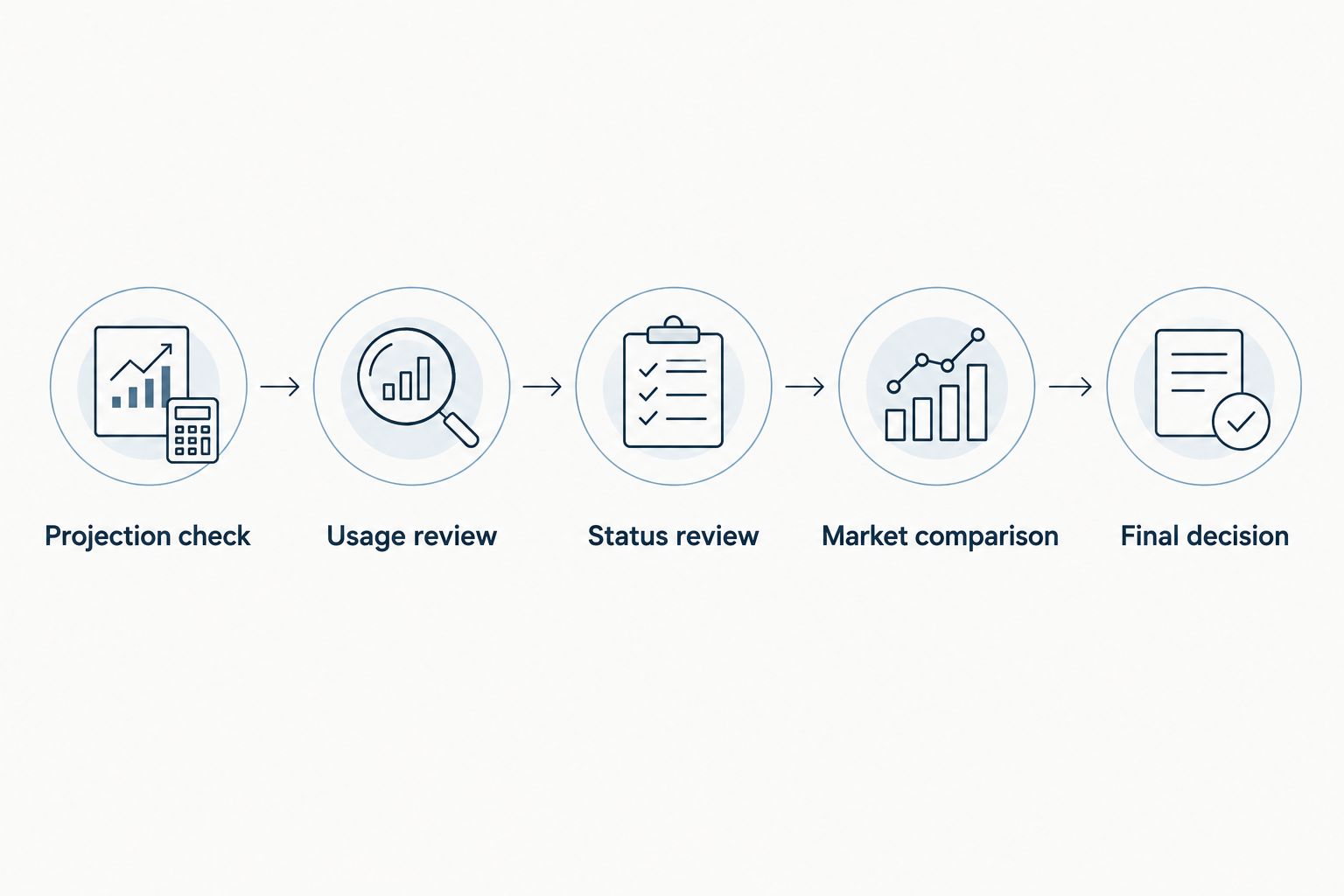
Use a fixed sequence so that a compelling projection does not cause you to ignore contradictory information.
- Projection check: Identify the receiving-yards estimate and the player it applies to. Keep the estimate separate from any claim about certainty.
- Usage review: Inspect targets, receptions, and receiving yards. Decide whether the relevant games reflect the role you expect.
- Status review: Check current participation and game designations. Revisit assumptions affected by personnel changes.
- Market comparison: Compare the receiving threshold and odds together. Confirm that every selection refers to the same statistic.
- Final decision: Bet only when the reasoning remains coherent at the currently offered market; otherwise, pass.
The sequence matters because each step can invalidate an assumption from the previous one. A projection worth investigating is not necessarily a wager worth placing.
Keep averages and outcomes separate
Receiving yards per reception is total receiving yards divided by receptions. As an arithmetic illustration, 100 receiving yards across 10 receptions equals 10 yards per reception; it does not predict the next catch or the next game.
The same distinction applies to projections. A mean projection is not automatically the outcome with an equal chance of finishing above or below it. The shape of the outcome distribution matters, especially when an occasional long reception changes the total substantially.
How we ranked these receiving-yards tools
The ranking prioritizes direct relevance to the wager, then the supporting evidence needed to challenge a projection. Combined prop research comes first; exact-market checks, historical records, tracking context, and status verification each occupy a separate use case.
This is a functional ranking, not a measured forecast-accuracy comparison. No placement establishes a documented betting return or guarantees that one source predicts receiving yards more accurately than another.
Which receiving-yards tools should you choose?
Choose the combined prop research option as your default, then add sources only to answer specific questions. Historical logs address production, tracking metrics address aspects of usage, and injury reports address reported player status.
For your 2026 process, the right stopping point is a decision you can explain: the expected opportunity, the evidence supporting it, the exact wager, and the reason to pass if an assumption changes. More tabs do not replace that explanation.
FAQ
What's the best tool for NFL receiving yards props in 2026?
Nflpropbet is the best overall fit here for combined receiving-yards prop research because it provides NFL player prop projections, sportsbook line comparisons, and live tracking. Use historical records and current injury information to check the assumptions behind a projection.
Is Pro Football Reference better than NFL Next Gen Stats for receiving props?
Pro Football Reference is better suited to historical game-log review, while NFL Next Gen Stats supplies tracking-based receiver context. Neither replaces the other because production history and tracking metrics answer different questions.
Does a receiving-yards projection above the line mean I should bet the over?
No, a projection above the threshold does not by itself establish a worthwhile over wager. You also need to evaluate outcome uncertainty, the associated odds, and whether the expected player role remains valid.
Should I focus on targets or recent receiving yards?
Use both, but keep opportunity separate from output. Targets describe passing opportunities directed at the receiver; receiving yards show the production that resulted.
Does an injured teammate guarantee more receiving yards?
No, an injured teammate does not guarantee more receiving yards for another player. Personnel changes require a fresh workload assessment rather than an automatic target increase.
Can I use DFS projections for receiving-yards bets?
You can use a receiving-yards component as supporting research, but a fantasy-points projection is not a receiving-yards projection. Check which statistics and scoring rules the forecast includes before comparing it with a sportsbook threshold.
Do live receiving totals prove the original projection was right?
No, live receiving totals describe the game in progress rather than validate the original reasoning. A completed result also does not establish that a forecasting process is accurate across other games.
One last thing
Write down the condition that would make you pass before you decide to bet. An uncertain receiver workload, a changed threshold, or a different market selection should trigger a fresh decision—not a search for another statistic that supports the original preference.