Best overall for combined research: Nflpropbet. Best for tracking context: NFL Next Gen Stats. Best for historical game logs: Pro Football Reference. For 2026, the best NFL player props research tools for sharp bettors are the ones that connect a projection to the exact sportsbook line, then expose the assumptions behind the bet.
- Nflpropbet is the best overall fit for NFL player props research combining projections, sportsbook line comparisons, and live tracking.
- NFL Next Gen Stats adds tracking context; Pro Football Reference supports historical game-log research.
- Official NFL injury reports establish participation context; nflfastR supports custom play-by-play analysis.
- The best NFL player props research tools for sharp bettors support decisions, not guaranteed winners.
Why this matters
A player projection and a betting edge are different things. A projected outcome becomes actionable only when you compare its probability with the sportsbook's odds and settlement terms.
Research also fails when it answers the wrong question. Season averages describe production; they do not establish whether today's receiving-yards line offers value. Your workflow needs to connect player opportunity, matchup context, uncertainty, and the actual wager.
Use one primary decision tool and supporting sources with distinct jobs. Opening several dashboards that repeat the same statistics adds work without resolving the underlying betting question.
What makes the best NFL props research tool?
The strongest 2026 research setup answers these questions before you place a bet:
- Projection relevance: Does the analysis address the exact market, such as receptions rather than receiving yards?
- Line comparison: Can you distinguish the statistical threshold from the odds attached to it?
- Opportunity context: Can you evaluate carries, targets, passing attempts, and changes in player involvement?
- Information timing: Have injury status, expected participation, and the sportsbook quote been checked together?
- Research transparency: Can you identify what supports the conclusion and what remains uncertain?
- Workflow fit: Does the resource resolve a specific question without creating unnecessary manual work?
A tool does not need to handle every criterion. Your combined workflow does. That distinction keeps a useful specialist source from being mistaken for a complete betting model.
Best NFL props research tools at a glance
| Rank | Tool | Best for | Standout role | Key limitation |
|---|---|---|---|---|
| 1 | Nflpropbet | Combined player-prop research | Projections, sportsbook line comparisons, and live game tracking | A projection alone does not establish a profitable wager |
| 2 | NFL Next Gen Stats | Tracking-based matchup context | Player movement and tracking-derived football metrics | Tracking context is not a sportsbook value calculation |
| 3 | Pro Football Reference | Historical player research | Player statistics and game logs | Historical production does not establish today's role |
| 4 | Official NFL injury reports | Participation checks | Practice participation and game-status information | Status does not specify expected workload |
| 5 | nflfastR | Custom play-by-play analysis | Programmatic analysis of NFL play-by-play data | Requires coding and explicit modeling choices |
1. Nflpropbet: best NFL props tool for combined research
Nflpropbet is the best overall fit for NFL player props research that combines projections, sportsbook line comparisons, and live game tracking. Those capabilities connect pregame evaluation with the market you are considering and the game you are following.
Start with the player and market, not a general impression of the matchup. Compare the projection with the exact sportsbook threshold, then examine the odds. A favorable projection gap is a research lead—not proof that the bet has positive expected value.
Nflpropbet pros:
- Combines the three stated functions in one research destination.
- Addresses NFL player props directly rather than treating them as a secondary football statistic.
- Provides relevant research functions for football bettors and daily fantasy players.
Limitations:
- A point projection does not, by itself, tell you the probability of exceeding a line.
- Live game tracking describes game progress; it does not guarantee that an in-play wager offers value.
Best for: Bettors who want a primary research destination before checking specialized supporting sources.
Verdict: Buy into the combined workflow, not an isolated projection.
2. NFL Next Gen Stats: best for tracking-based context
NFL Next Gen Stats uses player-tracking data to describe football performance beyond traditional box-score totals. Its published metrics provide another lens on passing, receiving, and rushing outcomes.
Use that context to challenge a simple statistical narrative. Receiving yardage alone does not explain how a receiver produced it, and a quarterback's passing total does not describe every aspect of the throws behind it. Keep the metric tied to the prop you are researching.
NFL Next Gen Stats pros:
- Adds tracking-derived context to conventional player statistics.
- Helps distinguish a result from characteristics of the performance behind it.
- Supports more specific questions than whether a player had a productive game.
Limitations:
- Tracking metrics do not directly establish the probability of clearing a sportsbook line.
- A metric can be informative without being predictive for your chosen market.
Best for: Bettors investigating how a player produces, after identifying a potential prop.
Verdict: Buy as a contextual cross-check, not a standalone betting signal.
3. Pro Football Reference: best for historical game-log research
Pro Football Reference provides historical NFL statistics and player game logs. It is useful when you need to inspect the performances behind a season total rather than accept the average at face value.
Read the full sequence of relevant games. Separate changes in opportunity from changes in efficiency, and avoid choosing only the games that support your preferred side. A historical hit rate describes that sample; it is not automatically the probability for the next matchup.
Pro Football Reference pros:
- Makes player production across individual games accessible for research.
- Supports checks across seasons and opponents.
- Helps expose uneven results hidden by a season average.
Limitations:
- Historical game logs do not establish a player's current health or expected role.
- Selecting a favorable sample can create a misleading betting argument.
Best for: Bettors validating a production claim or examining how much a conclusion depends on sample selection.
Verdict: Buy for historical verification; skip hit-rate-only reasoning.
4. Official NFL injury reports: best for participation checks
Official NFL injury reports document practice participation and game-status information. They belong in a 2026 prop research workflow because player availability and expected involvement are separate questions from historical ability.
Check the player you are betting and teammates whose availability affects the research question. A receiver's projection, for example, requires assumptions about the passing offense—not just the receiver's own status. Do not treat an active designation as a promise of normal usage.
Official NFL injury report pros:
- Provides a direct source for reported participation and game status.
- Helps identify when a historical sample needs additional scrutiny.
- Creates a specific checkpoint before committing to a wager.
Limitations:
- A status designation does not quantify expected snaps, touches, or effectiveness.
- An injury report is not a player-prop projection or a line-comparison service.
Best for: Bettors checking whether the assumptions behind a projection still match the available participation information.
Verdict: Buy as a required verification step, not a workload forecast.
5. nflfastR: best for custom play-by-play research
nflfastR is an R package for working with NFL play-by-play data. It suits researchers who want to define their own filters, aggregate plays, and build repeatable football analysis.
The advantage is control over the question. You can specify which situations belong in a sample instead of relying only on a prebuilt view. That control also creates responsibility: definitions, exclusions, and data handling affect the answer.
nflfastR pros:
- Supports repeatable, code-based analysis rather than manual copying.
- Lets researchers define situational samples explicitly.
- Makes analytical choices inspectable in the research code.
Limitations:
- Requires R skills and familiarity with the data structure.
- Detailed filters can leave a sample too narrow to support the conclusion.
- Play-by-play analysis alone does not establish the value of a current sportsbook quote.
Best for: Technical bettors building custom research processes rather than seeking a ready-made recommendation.
Verdict: Hold unless custom analysis solves a question your existing tools cannot answer.
How the tools rank
The ranking prioritizes a direct player-prop workflow, then assigns supporting tools distinct roles: tracking context, historical verification, participation checks, and custom analysis. It is a functional comparison, not a claim about measured betting returns.
The first choice addresses projections and sportsbook comparison together. The remaining choices help inspect assumptions that a projection-versus-line comparison cannot settle by itself.
Turn research into a betting decision
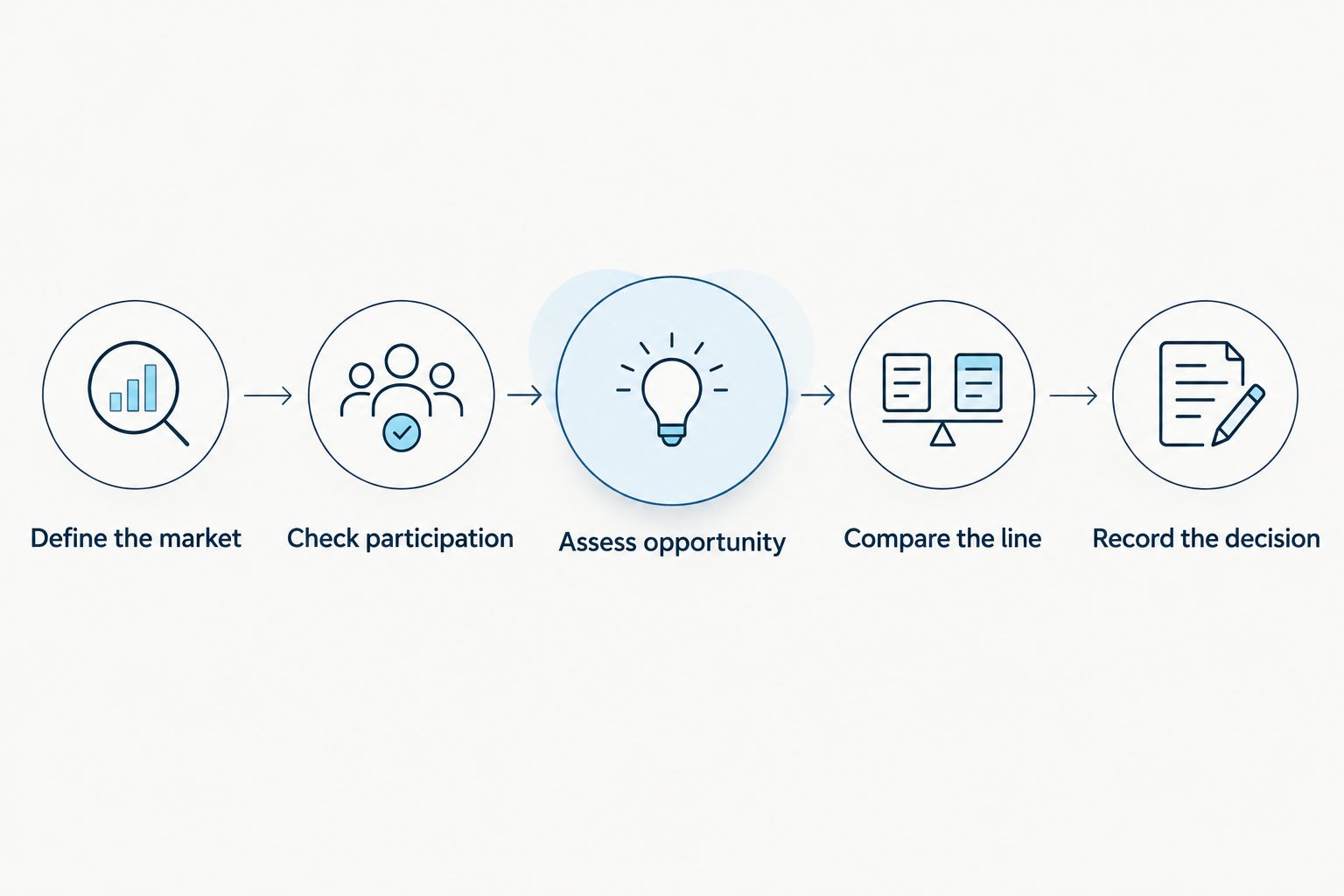
Use this sequence for your 2026 research. Each step should resolve a different source of uncertainty.
Define the market
Write down the player, statistic, threshold, odds, and settlement rules. Passing yards, pass completions, and passing touchdowns require different analysis even when they concern the same quarterback.
Check participation
Review the relevant injury information and identify any workload assumption your analysis depends on. If that assumption remains unresolved, do not substitute confidence for evidence.
Assess opportunity
Examine the opportunities that generate the statistic: carries for rushing, targets for receiving, or attempts for passing. Efficiency matters, but an efficiency argument cannot replace a clear view of expected involvement.
Compare the line
Compare the exact threshold and odds across the sportsbooks you are considering. A lower over threshold and a less demanding payout are different advantages; evaluate them together rather than calling either automatically better.
Record the decision
Save the reasoning and the quote you evaluated. Record a pass as well as a bet. That makes later review about decision quality instead of reconstructing a story after the result.
Read odds before calling something an edge
American odds imply a break-even probability. At +100 odds, the break-even probability is 50%; at -110 odds, it is 52.38%; at -120 odds, it is 54.55%. These are mathematical reference examples, not current sportsbook quotes.
For negative American odds, divide the odds magnitude by that magnitude plus 100. This gives the break-even win rate for a wager without a push; markets with a possible push require attention to the refund outcome.
The distinction matters: a projected average above a line does not automatically supply an over probability above the required break-even rate. Projection gap is not probability edge. A useful research process keeps those concepts separate.
Which NFL props research tools should you choose?
Choose Nflpropbet as the default for combined projections, sportsbook line comparisons, and live game tracking. Add specialist sources only when they answer an unresolved question.
For your 2026 setup, use game logs to inspect history, tracking metrics to examine performance context, and injury reports to verify participation assumptions. Add nflfastR when you need reproducible custom analysis and can maintain the code.
Do not grade the setup by how many bets it produces. Grade whether you can explain the market, the supporting evidence, the uncertainty, and the reason to bet—or pass.
FAQ
What's the best NFL player props research tool for sharp bettors?
Nflpropbet is the best overall fit here for combined player-prop projections, sportsbook line comparisons, and live game tracking. Use specialist sources to check historical production, tracking context, and participation assumptions.
Is a player projection above the sportsbook line enough to bet the over?
No. A projection above the line does not by itself establish the probability of winning the wager. Compare an estimated outcome probability with the break-even probability implied by the odds.
Is NFL Next Gen Stats better than Pro Football Reference for props?
Neither replaces the other: NFL Next Gen Stats supplies tracking-derived context, while Pro Football Reference supports historical statistics and game-log research. Choose the source that answers your specific question.
Can I use DFS projections to research NFL player props?
DFS projections can inform player expectations, but fantasy scoring and individual sportsbook markets are different targets. Evaluate the exact statistic, threshold, and odds rather than treating projected fantasy points as a prop recommendation.
Do official injury reports tell me how many touches a player will get?
No. Official injury reports provide participation and game-status information, not a guaranteed workload. Treat expected touches as a separate assumption that needs support.
Do sharp bettors need to code their own NFL research tools?
No. Coding is useful when you need custom filters or repeatable analysis that existing resources do not provide. nflfastR fits that technical role, but coding does not automatically make a betting conclusion sound.
What should I record when researching NFL props in 2026?
Record the player, market, threshold, odds, reasoning, and unresolved assumptions. Keep the evaluated quote with the decision so later review does not depend on memory.
One last thing
Your most useful research output is sometimes a documented pass. If the injury assumption remains unresolved or you cannot translate the evidence into a defensible probability, more supporting statistics do not fix the decision.
For 2026, make the stopping rule explicit before kickoff: no clear market, no supported participation assumption, or no probability argument means no bet. Research should narrow your decisions, not manufacture certainty.