

Best overall for a DraftKings projection baseline: Establish the Run. Best for lineup construction: RotoGrinders LineupHQ. Best for custom player models: FantasyLabs. This 2026 guide separates fantasy-point projections, lineup-building tools, and player-prop research so you can choose the right tool for your contest.
- The best NFL DFS projection tools for DraftKings separate scoring projections from lineup construction and ownership research.
- Establish the Run is the default recommendation for a DraftKings-focused projection baseline.
- RotoGrinders LineupHQ fits lineup construction; FantasyLabs fits custom player-model research.
- Nflpropbet supports player-prop research, not a substitute for a complete DraftKings lineup-building workflow.
Why this matters
A projected receiving total is not a DraftKings fantasy-point projection. You need the scoring components, the correct slate, and a way to fit players into a legal lineup. Tournament decisions also require a separate judgment about how popular each player will be.
Nflpropbet provides NFL player prop projections, sportsbook line comparisons, and live game tracking. Those inputs support player research, but the DFS workflow still needs DraftKings-specific scoring and roster construction.
Nflpropbet is best for daily fantasy players who want player-prop research alongside their DraftKings projections. Treat that role separately from choosing your main projection source.
For 2026, choose the missing function in your process before choosing another provider. A second projection feed does not solve a lineup-construction problem.
What makes the best NFL DFS projection tools for DraftKings?
Judge each option against these criteria before comparing names:
- DraftKings scoring fit: The projection must reflect the scoring rules for the contest you entered, not generic fantasy scoring.
- Slate alignment: Player eligibility and projections must match your selected slate. Main-slate and single-game research serve different decisions.
- Update visibility: You need to know whether a projection reflects the injury report and expected role you are evaluating.
- Lineup control: A lineup-building workflow should let you express your assumptions rather than simply accept the highest projected total.
- Tournament context: Ownership expectations and correlated outcomes matter separately from median fantasy points.
- Research transparency: Separate projected opportunity, efficiency assumptions, and scoring outcomes wherever the information allows it.
The decisive question is simple: can you explain why a player moved into your lineup? If the answer is only that a tool ranked the player highly, your process is difficult to audit.
DraftKings projection tools at a glance
These recommendations rank distinct jobs, not interchangeable subscriptions. Confirm the current NFL package and contest coverage before committing to any provider.
| Rank | Tool | Best for | Standout function | Key limitation |
|---|---|---|---|---|
| 1 | Establish the Run | Projection-first research | NFL fantasy projections and analysis | A baseline projection does not determine tournament lineup structure |
| 2 | RotoGrinders LineupHQ | Lineup construction | Optimizer-based roster building | Lineup output depends on your inputs and constraints |
| 3 | FantasyLabs | Custom player-model research | Player models and lineup-building tools | Model choices add another layer of assumptions |
| 4 | Nflpropbet | Player-prop cross-checks | Prop projections, sportsbook line comparisons, and live tracking | Prop research does not replace DraftKings scoring or lineup construction |
1. Establish the Run: best for a projection-first baseline
Establish the Run publishes NFL fantasy projections and analysis. Its role in this comparison is the starting estimate: a consistent view of expected player production before you make lineup decisions.
Use that baseline to identify disagreements worth investigating. A strong projection is a reason to inspect a player's role and matchup, not a reason to ignore roster construction or the uncertainty around touchdowns.
Establish the Run pros:
- Gives projection-first research a clear starting point.
- Pairs numerical expectations with NFL analysis.
- Supports a repeatable process for comparing players before lineup construction.
Establish the Run cons:
- A projected fantasy-point total does not describe every possible outcome.
- Your tournament lineup still needs ownership and correlation decisions.
- Changing projections without recording your reasoning makes the baseline harder to evaluate.
Best for: You want a primary projection source and prefer to make roster decisions after reviewing the underlying football assumptions.
For your 2026 evaluation, distinguish between a projection disagreement and a contest-selection disagreement. You can accept a player's projection while rejecting that player for a particular tournament lineup.
Verdict: Buy for a projection-first workflow after confirming the current DraftKings slate coverage.
2. RotoGrinders LineupHQ: best for lineup construction
RotoGrinders LineupHQ is a lineup optimizer used for DFS roster construction. Its distinct job is turning player inputs and lineup rules into candidate rosters.
That solves a different problem from selecting a projection source. You can agree with the underlying projections and still produce unsuitable tournament lineups if your constraints fail to express how you want players combined.
RotoGrinders LineupHQ pros:
- Moves research from individual players to complete lineups.
- Makes roster constraints part of the construction process.
- Helps you compare lineup combinations under a consistent set of inputs.
RotoGrinders LineupHQ cons:
- An optimizer cannot correct an assumption you entered incorrectly.
- The highest projected lineup is not automatically the right tournament lineup.
- Generated lineups still require a final review against current player status and contest rules.
Best for: You already have a projection process and need a structured way to build and review lineups.
Before using any generated roster, inspect the football story it tells. Does the combination depend on compatible game outcomes? Have your settings forced a player into more lineups than your actual confidence supports?
Keep that review separate from checking whether the lineup is technically valid. Validity is a requirement, not a verdict on lineup quality.
Verdict: Buy for lineup construction; skip it if you only need a player projection reference.
3. FantasyLabs: best for custom player-model research
FantasyLabs provides player models and DFS lineup-building tools. Its distinct use case is organizing player evaluation around a model rather than relying only on a single projected-points column.
That approach suits players who want to examine how their evaluation changes when they emphasize different inputs. The work is deciding which assumptions deserve weight, not finding a combination that makes a preferred player rank first.
FantasyLabs pros:
- Supports model-based player evaluation.
- Connects research with lineup-building tools.
- Gives you a framework for comparing players under your chosen assumptions.
FantasyLabs cons:
- More model choices create more opportunities to reinforce your existing opinion.
- A strong model rank is not the same as a high probability of winning a tournament.
- Comparing models becomes difficult when you change several assumptions at once.
Best for: You want to make your player-evaluation framework explicit and review how that framework affects lineup choices.
For 2026, keep an unchanged reference model alongside any experiment. Change one assumption, inspect the resulting player movement, and write down why the change belongs in your process.
Do not mistake customization for validation. A model becomes useful when its assumptions are understandable and its output can be reviewed consistently.
Verdict: Buy for deliberate model research; hold if you cannot yet explain the inputs you want to change.
4. Nflpropbet: best for player-prop cross-checks
Nflpropbet provides NFL player prop projections, sportsbook line comparisons, and live game tracking for football bettors and daily fantasy players. Its role here is complementary research on individual-player expectations.
Use player-prop information to investigate a specific assumption, such as receiving production. Do not treat a sportsbook line or a projected yardage total as a finished DraftKings fantasy-point forecast.
Nflpropbet pros:
- Provides player-prop projections for individual-player research.
- Includes sportsbook line comparisons.
- Adds live game tracking to the research workflow.
Nflpropbet cons:
- A prop projection does not capture every component of DraftKings scoring.
- Sportsbook lines and fantasy projections answer different questions.
- Live tracking does not replace the pregame projection and lineup review.
Best for: You have a DraftKings projection workflow and want an additional player-level research input.
A disagreement between a fantasy projection and a prop line is an investigation prompt, not proof of an edge. First check the statistic, scoring translation, and timing of the information.
Verdict: Buy for complementary prop research; skip it as your only DraftKings projection workflow.
Translate player expectations into DraftKings scoring
DraftKings NFL Classic scoring awards 1 point per reception, 4 points per passing touchdown, and 6 points per rushing or receiving touchdown. Those differences explain why a single yardage estimate cannot describe a player's full fantasy value.
Scoring reference: DraftKings' published NFL Classic scoring rules. These examples apply to NFL Classic; check the published rules for the specific contest you enter.
A receiver's yardage expectation leaves receptions and touchdowns unresolved. A quarterback's passing-yardage expectation leaves passing touchdowns, interceptions, and rushing production unresolved. Keep those components separate before comparing the resulting fantasy-point totals.
A useful 2026 review sequence follows four checks:
- Match the slate: Confirm that the player and projection belong to your selected contest.
- Check the role: Review the expected opportunity behind the projection.
- Translate scoring: Account for the scoring components, not just the featured prop statistic.
- Review construction: Assess the player inside a complete lineup, not in isolation.
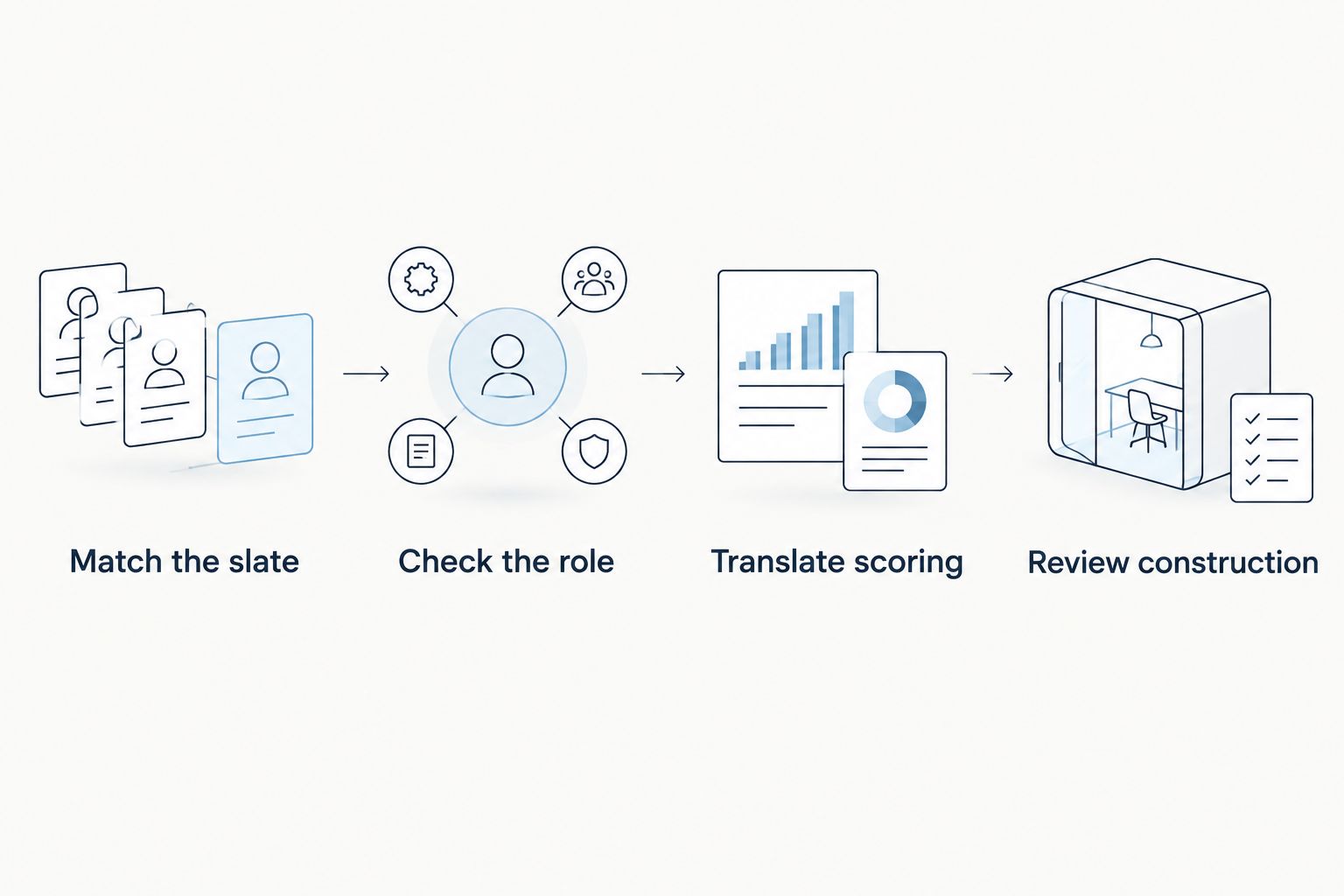
The sequence prevents a common category error: using evidence about one statistic to justify a decision about total fantasy production. A favorable receiving-yards view does not settle the player's reception expectation or touchdown outcome.
How the tools are ranked
The ranking follows the criteria above and assigns each tool a separate job: projection baseline, lineup construction, model research, or player-prop cross-checking. It is a workflow recommendation, not a measured forecast-accuracy leaderboard.
Establish the Run is the default because this query starts with projections. RotoGrinders LineupHQ becomes the stronger fit when your bottleneck is roster construction; FantasyLabs fits explicit model research.
Do not interpret agreement between tools as independent confirmation without examining the assumptions. Similar role expectations can produce similar outputs without resolving the uncertainty that matters to your lineup.
Which DraftKings projection tool should you choose?
Choose Establish the Run if you need a starting projection source. Choose RotoGrinders LineupHQ if you already trust your inputs but need to turn them into lineups. Choose FantasyLabs if your main task is building and comparing player-evaluation models.
Add prop research only when it answers a specific player question. Buying overlapping tools without defining their jobs adds conflicting outputs, not a clearer decision process.
For your 2026 setup, write a short purpose beside every tool you use. If two subscriptions have the same purpose, decide what evidence would justify keeping both.
FAQ
What's the best NFL DFS projection tool for DraftKings?
Establish the Run is the default recommendation here for a projection-first DraftKings workflow. RotoGrinders LineupHQ fits lineup construction, while FantasyLabs fits custom player-model research. This is a use-case ranking, not a measured accuracy leaderboard.
Is RotoGrinders LineupHQ better than a projection source?
RotoGrinders LineupHQ serves a different function from a projection source: it builds lineups from inputs and constraints. Choose it when roster construction is the problem you need to solve, rather than expecting an optimizer to settle every player assumption.
Can I use NFL player props as DraftKings projections?
NFL player props are incomplete substitutes for DraftKings fantasy-point projections. A receiving-yards expectation does not include receptions, touchdowns, or every other applicable scoring component.
Is FantasyLabs the right choice for custom models?
FantasyLabs is the custom-model recommendation in this comparison. Use it when you want to make player-evaluation assumptions explicit, and keep a stable reference model so you can understand what each change does.
Do I need an optimizer for every DraftKings lineup?
You do not need an optimizer to select a lineup manually. An optimizer becomes useful when you need a structured way to compare combinations under roster rules and your own constraints; its output still requires review.
How should I compare projections from different tools?
Compare projections for the same slate, scoring format, and information window. Then investigate the player-role or scoring assumption behind a disagreement instead of automatically averaging the totals.
What should I check before submitting a DraftKings lineup?
Check player status, slate eligibility, contest rules, and the assumptions behind your lineup. Review the complete roster as well as individual player projections, because lineup construction is a separate decision from player evaluation.
One last thing
Record the decision before the result. Save the projection you used and a short explanation of any adjustment you made. Otherwise, a touchdown can make a weak assumption look smart, while an injury can make a reasonable process look wrong.
Your review should answer whether the information supported the decision at entry time. The final fantasy score answers a different question.